For many years in our industry, designing a good product, delivering it on time, and ensuring quality were sufficient requirements meant you were doing a good job. Today, that is no longer the case.
Companies working in water management face new challenges every day: rising energy costs, resource availability, service continuity, evolving regulations, and increasingly demanding expectations.
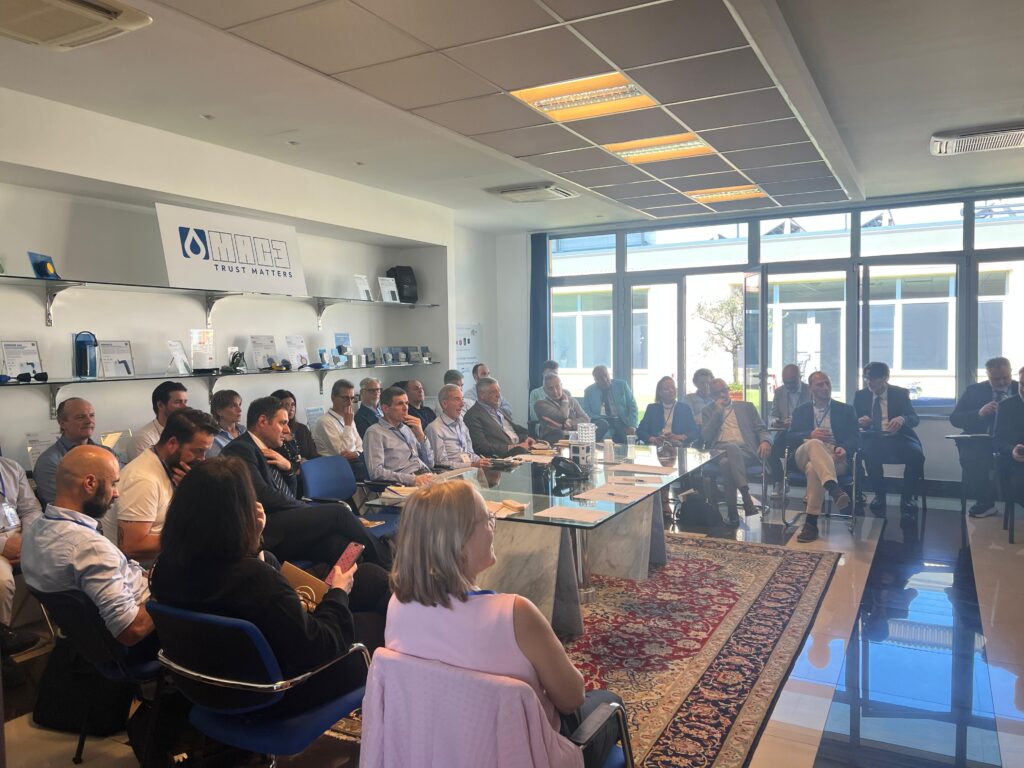
This awareness inspired Building Value Together, a day of discussion and exchange held at our headquarters, bringing together clients, suppliers, university partners, and professionals who have been working alongside us for many years.
We didn’t focus our discussions on products. Instead, we wanted to explore a broader question: what does it take to create lasting value in today’s industrial supply chains?
The conversations that emerged throughout the day revealed a common belief: the best solutions often come from bringing together different skills, experiences and perspectives.
The best solutions grow through collaboration
Over the past few years, we have seen the role of companies within the supply chain evolve. The traditional supplier model, largely based on price, volumes, and technical specifications, is no longer enough to address the complexity of today’s market.
More and more often, the solutions that meet the real market needs are those born when different skill sets meet and work on the same problem.
For example, our long-standing collaboration with Umbra Pompe led to a question: can we make solar pumping more accessible in areas where installation costs are still a major barrier? That reflection led to the development of an off-grid solar pumping kit capable of operating with fewer solar panels, reducing the initial investment required and expanding the opportunities for use in areas without access to the electrical grid.
A similar approach guided our collaboration with Elbi and their AQUAPURA division. For companies involved in water recovery and reuse, reliability and continuous operation are essential requirements. The integration of our Agma, Mac3 e Quickstop devices into their systems comes from a shared commitment to ensuring reliable operation in applications where every component plays an important role. The collaboration has also opened the door to a shared service network in international markets.
Collaboration takes many forms, including product development. During the design of our HC easyFIT inverter, the contribution of Mac Design helped transform technical requirements and industrial constraints into a user-friendly interface and a product designed to simplify the installer’s work.
These experiences may be different, but they share one important lesson: value does not come from the simple sum of separate skills. It emerges when those skills come together to solve a real problem.
Knowledge must reach the production floor
One of the strongest themes that emerged during the day was the relationship between knowledge and practical application.
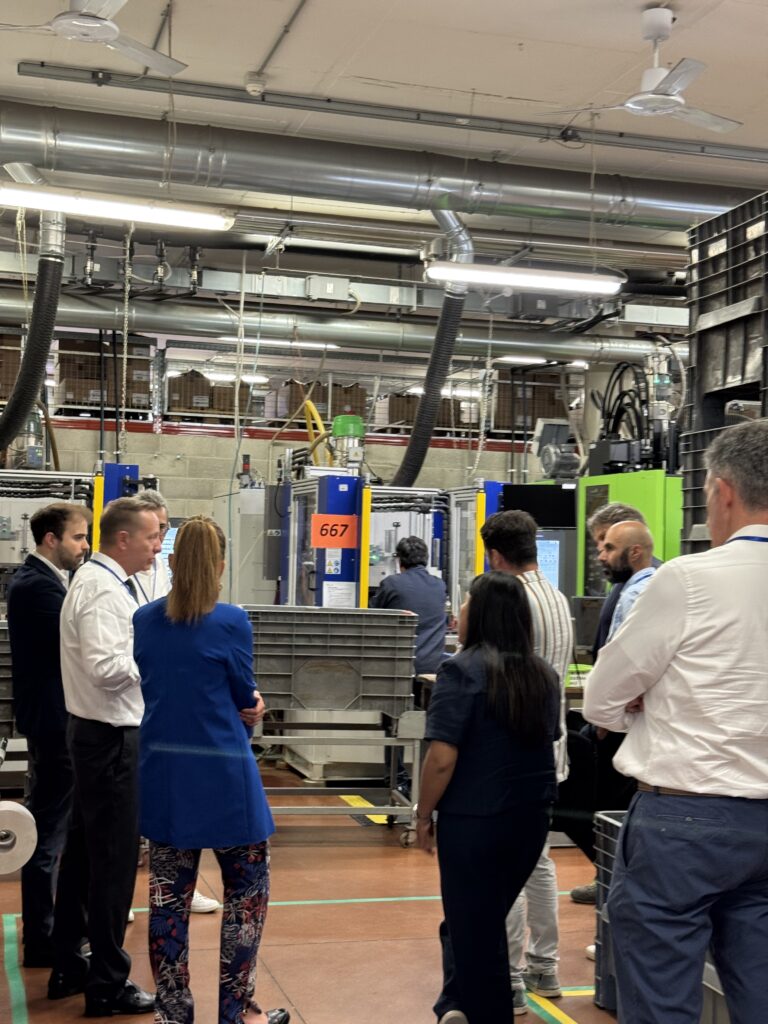
As Professor De Carlo and Professor Redini noted, theories and strategic models should not remain abstract concepts. They need to reach the Genba, the place where work actually happens, and become practical tools that make people’s daily work easier and more effective.
When theory meets practice, the principles of Lean Production stop being academic concepts and become tangible improvements, developed by observing real processes and listening to the people who perform them every day.
Over the years, we have seen this happen in projects focused on reducing setup times, redesigning production activities, and improving workstation ergonomics. These are often small changes, almost invisible from the outside, but they have a meaningful impact on everyday work and allow people to focus more on activities that create value.
This approach brings with it an important realization: people working in production are not simply operators. They are a constant source of experience, observations and ideas.
In an increasingly complex manufacturing environment, overlooking this knowledge means overlooking one of the most valuable assets any company has: its people.

Trust is built through daily choices
Every supply chain relies on something that often remains invisible: trust. Strong relationships, transparency and integrity are the foundations on which long-term partnerships are built.
The contribution from Ing. Pilotto of DAB Pumps highlighted how this issue is becoming increasingly important across international supply chains. Today, factors such as traceability, environmental responsibility, people management, and corporate governance are playing a growing role in supplier evaluation processes.
This is a sign of a deeper change: companies are chosen not only for what they produce, but for how they operate. From this perspective, aligning and certifying the different organisations that make up a supply chain, as in the case of Mac3, becomes a natural step in supporting the sustainability goals of business partners.
When an entire supply chain moves in this direction, the benefits extend beyond any single company. They become a shared advantage for the stakeholders involved.
Looking ahead, together
The discussions we shared throughout the day reinforced a belief that experience has confirmed many times over the years: the ability to listen, collaborate, and build strong relationships remains one of the most important ways to create value across the supply chain.
This is the spirit behind Building Value Together, and it is the approach we intend to continue cultivating with customers, colleagues, suppliers, and partners. Because creating an environment where expertise, experience, and responsibility can come together is the most effective way we know to create lasting value.
Not only for MAC3, but for the entire supply chain of which we are part of.